领学术科研之先,创食品科技之新
—— 中国食品杂志社

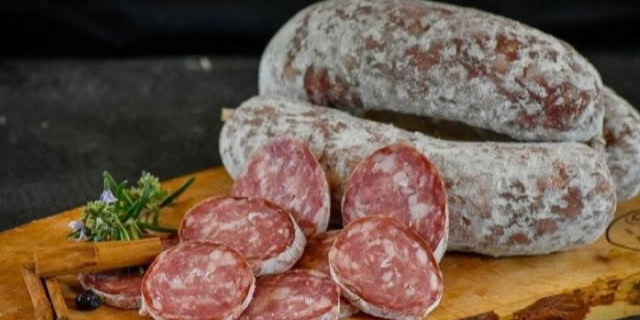
Microorganisms are crucial for the breakdown of proteins and lipids in dry-fermented sausages and are intimately associated with the flavor profile of sausages. In this study, we used a mixed starter culture to ferment sausages and investigated the flavor turnover. During the fermentation of salami, the data from free amino acids (FAAs), free fatty acids (FFAs) and volatile flavor substances were used to assess the quality of salami. At the end of fermentation, the total FAAs increased from 1171.32 to 4582.48 mg/kg in the control group and 5053.25 mg/kg in the experimental group. Additionally, following inoculation with the mixed starter culture, the levels of glutamic acid, lysine, methionine, valine and leucine were significantly higher (P < 0.05) than those in the control group. Oleic acid (C18:1) and chondritic acid (C16:0) were the two most abundant FFAs in both salami samples with 45.86% and 26.07% on the 23th day in mixed culture inoculated salami. The mixed starter inoculated group had significantly lower saturated fatty acids and higher percentage levels of monounsaturated fatty acids than the control group (P < 0.05). In the volatile flavor substance analysis, a total of 61 volatile compounds were found. Ester compounds were progressively enriched with drying time, significantly increasing the flavor substances, like ethyl diphosgene, 1-octen-3-ol, and 2,3-butanediol at P < 0.05. The correlation analysis between the core flora and volatile flavor compounds during fermentation and maturation of salami indicates Lactobacillus sakei and Lactobacillus rhamnosus were significantly higher and positively correlated with the major volatile organic compounds, which are the key core microorganisms affecting the flavor quality of fermented sausages.
 电话: 010-87293157
 地址: 北京市丰台区洋桥70号
版权所有 @ 2023 中国食品杂志社 京公网安备11010602060050号 京ICP备14033398号-2